
My early research was oriented around the question of how people navigate difficult life experiences, including professional stress and bereavement, both alone and with the support of others. Using complex longitudinal models as well as experimental research, this work revealed that while such experiences can be opportunities for growth, many individuals resist accepting help from others, which potentially undermines the effectiveness of social support and the closeness of the relationship. My current and emerging work builds on that foundation toward a relational and participatory psychology of encounter, exploring how engagement with one’s biography, other people, symbolic and spiritual experience, and the living world can foster meaning, transformation, and more intentional ways of living. I am particularly interested in how people recognize and integrate consequential experiences; how autobiographical reflection, ritual, story, and noninterpretive witnessing can help insight become lived change; and how unrecognized losses shape personal and collective life. One applied area I am currently interested in pursuing is the development and well-being of men and boys and the relational practices that help them become responsible, creative, and generative participants in their families and communities. I use qualitative, quantitative, and mixed methods according to the needs of the question, with an emphasis on participant voice, methodological transparency, and scholarship that contributes beyond traditional academic boundaries.

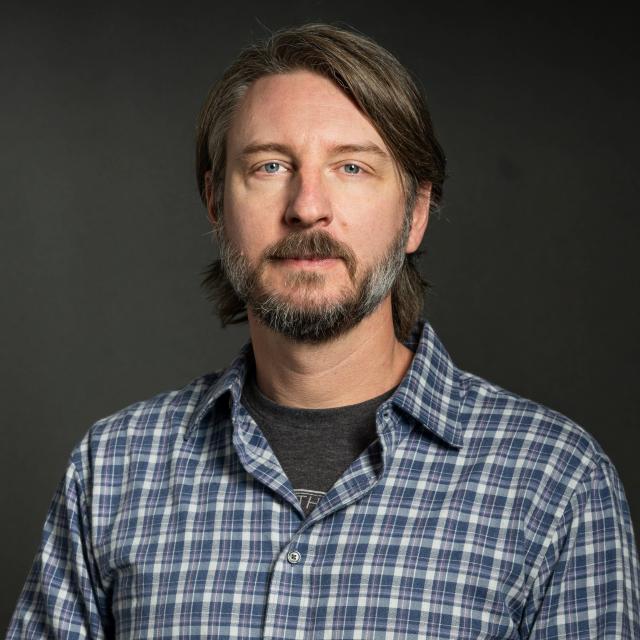
Christopher Burke
Associate Professor
B.S. in physics and psychology, Carnegie Mellon
Ph.D. in social psychology (minor in quantitative psychology), NYU
Certificate in biography work facilitation, Center for Biography and Social Art
Explore this Profile×
Research Areas
Additional Interests
- Grief and loss
- Self-insight and meaning making
- Philosophy and spirituality
- Participatory research
- Statistical methods
Research Statement
Biography
I was halfway through college before I took my first psychology class – almost by accident. I had become clear that I no longer wanted to become a physicist, but I had no Plan B. I created one by taking every course that sounded interesting to me, and many of them were truly interesting, but none resonated as a calling until I walked into a class in personality psychology. In that moment, I realized that I had always been interested in human behavior and individual differences – I just didn’t know what it was called or that it was something you could pursue as a profession. More than two decades later, I’m still discovering the roots of that interest and how I can best use my time and abilities to bring a deeper understanding of the human experience into the world. As a researcher, educator, and biography work facilitator, I strive to understand meaning, human development, and the conditions that allow people to encounter themselves, one another, and the living world more fully. Trained as a social psychologist and quantitative methodologist, I teach a wide range disciplinary and interdisciplinary seminars – including Grief, Anxiety, and Resilience and What Makes for a Meaningful Life? – as well as core psychological courses, such as Personality and graduate-level statistics. My orientation has increasingly been shaped by a wide range of humanistic, existential, philosophical, spiritual, and participatory traditions, which have greatly expanded my views on what is possible in a human life. Across my teaching, research, and group facilitation work, I seek to create spaces in which people can encounter their lives with greater curiosity, recognize their unique capacities, and move toward more intentional and generative ways of being in the world. Outside of work, you can find me cooking, building things, spending time with my family, listening to and playing music, training for triathlons, or coaching youth sports.
Selected Publications
Burke, C. T., Shrout, P. E., & Bolger, N. (2007). Individual differences in adjustment to spousal loss: A nonlinear mixed model analysis. International Journal of Behavioral Development, 31, 405-415. doi:10.1177/0165025407077758
Bender, M., Woike, B. A., Burke, C. T., & Dow, E. A. A. (2012). The relationship between implicit and explicit motives, goal pursuit, and autobiographical memory content during a diary study. Journal of Research in Personality, 46, 374-383. doi:10.1016/j.jrp.2012.03.005
Burke, C. T., & Goren, J. (2014). Self-evaluative consequences of social support receipt: The role of context self-relevance. Personal Relationships, 21, 433-450. doi:10.1111/pere.12039
Burke, C. T., & Perndorfer, C. C. (2016). Negative emotional responses to motherhood-related support receipt during pregnancy predict postpartum depressive symptoms, Anxiety, Stress, and Coping, 29, 580-588. doi:10.1080/10615806.2015.1092023
Konkoly, K., & Burke, C. T. (2019). Can learning to lucid dream promote personal growth? Dreaming, 29, 113-126. doi: 10.1037/drm0000101.
Teaching
PSYC/REL 090 – What Makes for a Meaningful Life?
PSYC 153 – Personality
PSYC 202 – Research Methods and Data Analysis II
PSYC/HMS 302 – Stress and Coping
PSYC/HMS 379 – Grief, Anxiety, and Resilience
PSYC 421 & 422 – Statistical Analysis of Psychological Data I and II
PSYC 450 – Special Topics in Mathematical Models and Statistics