
When a radiologist scans an X-ray for tumors or a TSA officer examines baggage for prohibited items, they're engaged in far more than simple observation. They're executing complex cognitive processes that transform sensory information into meaningful decisions. A deeper mechanistic understanding of these cognitive processes could dramatically improve outcomes in high-stakes scenarios.
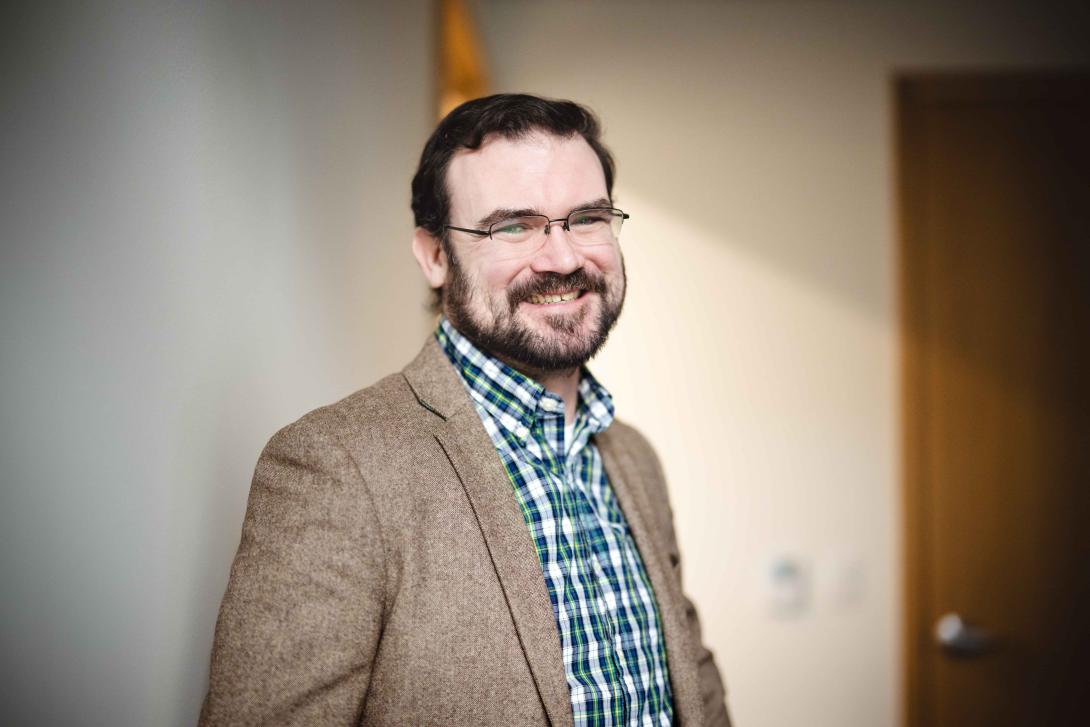
Patrick Cox, assistant professor of psychology, is working to decode these mechanisms. His research program investigates how the brain processes visual information, directs attention, and conducts visual search — the everyday act of looking for specific objects while filtering out irrelevant stimuli.
"How we successfully perform visual search is a basic science question about something that we do all the time in our daily lives," Cox says. "But it's also really important in lots of really high stakes applied settings." By understanding the fundamental principles of visual perception and attention, his work aims to inform critical real-world applications in medical imaging, security screening, and defense intelligence.
Cox's laboratory employs a comprehensive methodological toolkit. The core work involves traditional behavioral experiments where participants complete visual search and object identification tasks on computer displays. By manipulating variables such as display characteristics, trial sequences, and feedback mechanisms, researchers can measure reaction times and accuracy to determine what factors make searches efficient.
Spotlight Recipient

Patrick Cox
Assistant Professor